Pregnancy Week 3: The Miracle of Implantation
Welcome to Week 3! While Week 2 was about the possibility of life, Week 3 is about the biological reality. Inside your fallopian tubes, a microscopic journey of epic proportions is taking place. If fertilization was successful, you now carry a Zygote that is rapidly transforming into a Blastocyst as it searches for a permanent home in your uterus.
Clinical Phase: Early Luteal Phase
Fetal Development: Zygote to Blastocyst Transition
Primary Process: Cellular Division & Implantation
Baby's Size: Microscopic (0.1mm - 0.2mm)
Section 1: Filling the Gap — From Zygote to Blastocyst
Immediately after fertilization, the zygote contains all the genetic information it will ever need. However, it cannot stay in the tube. It must travel toward the uterus. During this journey, it undergoes Cleavage—rapid cell division without increasing in overall size.
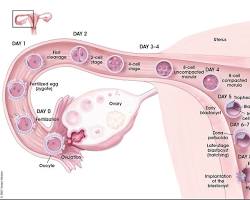
The Hatching Phase: Before it can attach to your uterine wall, the blastocyst must 'hatch' from its protective outer shell.
By Day 4, the zygote becomes a Morula (a solid ball of 16 cells). By Day 5 or 6, it transforms into a hollowed-out Blastocyst. This blastocyst consists of an inner cell mass (the future baby) and an outer ring called the trophoblast (the future placenta).
Section 2: The Critical Moment — Implantation Science
Implantation is the most delicate stage of early pregnancy. Around Day 20 to 24 of your cycle, the blastocyst reaches the uterus and begins to burrow into the soft, nutrient-rich lining (the endometrium).
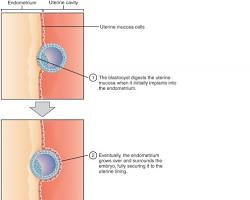
Anchoring Life: Implantation creates the first physical connection and shared blood supply between mother and child.
This is not just a physical attachment; it is a chemical conversation. The blastocyst and the uterine lining signal to each other to ensure the "Implantation Window" is open. Once anchored, the trophoblast cells start producing hCG, the hormone that tells your body to stop your period and support the pregnancy.
Section 3: Filling the Gap — Implantation Spotting vs. Period
As the blastocyst burrows into the uterine wall, it can disrupt tiny blood vessels. This results in light spotting, which many women mistake for an early period.
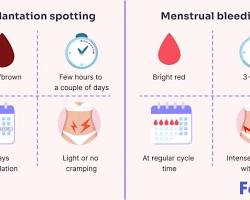
Knowing the Difference: Implantation spotting is scant, pink or brown, and lasts only a few hours to two days.
Section 4: Symptoms — The "Invisible" Changes
| Symptom | The Biological Reason | Management Tip |
|---|---|---|
| Light Spotting | Minor bleeding as the embryo anchors to the uterine wall. | Avoid tampons; if you suspect pregnancy, use only light liners. |
| Heightened Smell | Rising progesterone levels affect your sensory perception. | Carry a lemon-scented sachet to mask offensive smells. |
| Mild Bloating | Hormones slow down your digestive system to maximize nutrient absorption. | Eat small, frequent meals to reduce gas and discomfort. |
Section 5: Action Plan — The "Two Week Wait"
Section 6: FAQ — Deep-Dive Expert Answers
Can I feel implantation happening?
The moment of attachment is microscopic. While you cannot feel the "burrowing," you may feel the hormonal shifts that follow, such as mild cramping or breast tenderness.
Why is a 'Chemical Pregnancy' so common in Week 3?
A chemical pregnancy occurs when implantation starts but the embryo has a chromosomal abnormality and fails to progress. It is a natural "safety check" by the body.
Essential Tools for Week 3
👉 Calculate your pregnancy due date
👉 View the full 40-week guide
Medical Disclaimer: This content is for informational purposes only. It is not intended to provide medical advice or to take the place of treatment from a physician.