Pregnancy Week 4: The Blueprint of Life
Welcome to Week 4! This is the week of the "Big Reveal." Your baby, now an Embryo, has successfully moved from the fallopian tube and nestled into your uterine lining. While it's only the size of a poppy seed, the complexity of development occurring right now is staggering.
Clinical Phase: Early Embryonic Period
Major Milestone: The Positive Pregnancy Test
Primary Hormone: hCG (Human Chorionic Gonadotropin)
Baby's Size: Poppy Seed (~1mm)
Section 1: Filling the Gap — Gastrulation & The Three Germ Layers
A major "Content Gap" on giant sites is the lack of detail regarding Gastrulation. This is the process where the ball of cells (blastocyst) organizes itself into three distinct layers. Each layer is responsible for specific parts of your baby's future body.
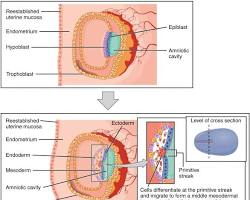
The Biological Foundation: The three layers that will form every organ and tissue in your baby's body.
- Ectoderm: This layer will become the brain, spinal cord, and skin.
- Mesoderm: This forms the heart, circulatory system, muscles, and bones.
- Endoderm: This layer develops into the lungs, liver, and digestive tract.
Section 2: Filling the Gap — The hCG Doubling Science
Most competitors mention hCG, but they don't explain the doubling time. hCG is the hormone that signals your ovaries to stop releasing eggs and start supporting the pregnancy. For a healthy pregnancy, these levels should roughly double every 48 to 72 hours.
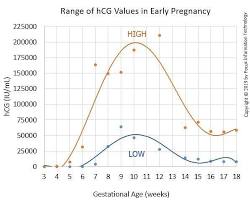
Testing Logic: If you get a 'faint line' today, your hCG levels will likely be 2-3 times stronger in 48 hours.
Section 3: Filling the Gap — The Yolk Sac (The First Kitchen)
While the placenta is forming, it isn't functional yet. Another gap in most articles is the Yolk Sac. This tiny structure provides all the nutrients and blood cells the embryo needs until the placenta takes over in the second trimester.
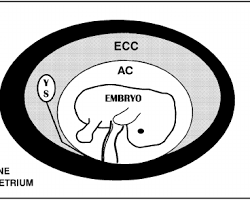
Early Life Support: The yolk sac is the embryo's primary source of nutrition during these critical first weeks.
Section 4: Symptoms — Why You Feel "Different" Already
| Symptom | The Biological Reason | Management Tip |
|---|---|---|
| Missed Period | hCG has canceled the menstrual cycle to protect the embryo. | This is your signal to take a high-sensitivity pregnancy test. |
| Sore Breasts | Rising estrogen and progesterone preparing milk ducts. | Switch to a wire-free, supportive cotton bra. |
| Implantation Cramping | The embryo burrowing deeper into the nutrient-rich lining. | Stay hydrated; mild cramps are normal. |
Section 5: Action Plan — The First Positive Steps
Section 6: FAQ — Expert Deep-Dive
What if I have a negative test but no period?
You may have ovulated later than you thought. This is called "Late Implantation." Wait 2 days for your hCG levels to double and test again using your first morning urine.
Is spotting in Week 4 a sign of miscarriage?
Not necessarily. Up to 25% of healthy pregnancies involve some spotting in the first few weeks due to implantation or cervical sensitivity.
Essential Tools for Week 4
👉 Calculate your official Due Date
👉 See the full First Trimester directory
Medical Disclaimer: This content is for informational purposes only. It is not intended to provide medical advice or to take the place of treatment from a physician.